
< RESOURCES / >
Finding Jobs in Debrecen: A Consultant's Guide

Debrecen's job market has undergone a significant transformation. Once a city where talent often looked elsewhere, strategic foreign investment has turned it into a high-growth economic hub. For technical and product-savvy professionals, this shift presents a clear business case: a stable, expanding job market with opportunities that directly impact global industries.
Why Debrecen is a Strategic Career Hub

Over the past decade, Debrecen has executed a deliberate economic reinvention. The previous "brain drain" has reversed, establishing the city as a magnet for skilled professionals and multinational corporations. This isn't a short-term trend; it's the outcome of a focused strategy to build a resilient, diversified economy.
For a professional, this translates to reduced career risk. With a mix of global industry leaders and established local firms, your skills remain in high demand. For businesses, this environment provides a reliable talent pipeline, a critical factor for accelerating project timelines and maintaining a competitive edge.
A Market Defined by Sustainable Growth
The data validates this transformation. In the last decade, Debrecen has announced the creation of over 20,000 new jobs. This surge has driven the city toward near-full employment, fundamentally altering its economic landscape.
Ten years ago, the number of registered job seekers was around 12,000. Today, that figure has fallen dramatically. The on-the-ground reality is that qualified professionals can find relevant roles. This growth is a significant milestone, aligning the city's employment metrics with the national average, as highlighted by local leaders discussing the job market's transformation.
This isn't a speculative boom. The sustained economic expansion makes Debrecen a calculated move for long-term career growth. Its diversified industrial base mitigates the risks associated with single-industry towns, ensuring greater market stability.
This dynamic environment for jobs in Debrecen is built on several key pillars:
- Strategic Foreign Direct Investment: Global leaders in automotive, manufacturing, and technology have invested billions, creating thousands of secure, high-value roles. This reduces market volatility and provides long-term career stability.
- A Thriving Business Services Sector: Industrial growth has catalyzed a ripple effect in related sectors. Business services, IT, and logistics are expanding, opening diverse professional opportunities that support core industries.
- Strong University-Industry Collaboration: The University of Debrecen partners with employers to ensure graduates possess market-relevant skills, reducing the skills gap and lowering training costs for businesses.
Let's examine the key figures that frame Debrecen's economic health.
Debrecen Job Market: A Snapshot
These figures demonstrate a city with a robust and expanding job market, offering a clear career path rather than just a job. The combination of high growth, industrial stability, and improving quality of life makes now an opportune time to explore this rising economic hub.
Key Industries and Top Employers for Jobs in Debrecen
Debrecen’s economic strength is rooted in its industrial diversity, creating a stable job market that mitigates risk for both professionals and businesses. This strategic mix reduces dependency on any single sector, ensuring a more resilient employment landscape.
The city is on a clear growth trajectory, with projections indicating an additional 35,000 jobs by 2030. This expansion is fueled by significant investment; since 2015, over €12 billion has been injected into the region, generating over 19,500 new positions. This solidifies Debrecen's role as a key industrial hub in Central Europe. You can review a more granular analysis in this detailed investment breakdown.
This calculated mix of industries is driving the demand for professionals seeking jobs in Debrecen.
The E-Mobility and Automotive Revolution
The automotive and e-mobility sector is at the forefront of Debrecen's transformation. This is not simple assembly; it's about building Europe's electric vehicle supply chain. Global leaders have established cutting-edge facilities, creating a hub for future-focused automotive technology.
BMW’s new "fossil-free" plant, designed for its Neue Klasse electric vehicle generation, exemplifies this shift. It represents a new paradigm in manufacturing, integrating sustainability, advanced robotics, and full-scale digitalization.
Key players and the roles they are creating include:
- BMW Group: Actively hiring for engineering (mechanical, electrical, software), production management, logistics, QA, and IT. Their digital manufacturing focus creates high demand for data analytics and automation specialists.
- CATL (Contemporary Amperex Technology Co. Limited): As a global leader in battery manufacturing, their gigafactory requires chemical engineers, materials scientists, process automation experts, and R&D specialists.
- EVE Energy: Focused on next-generation battery cells, creating roles for research scientists, manufacturing technicians, and supply chain managers.
- Vitesco Technologies: A key supplier of electric drivetrains, needing electronics engineers, embedded systems developers, and powertrain designers.
The presence of these anchor companies creates a powerful ecosystem effect. It attracts a network of suppliers and service providers, which de-risks the supply chain, reduces lead times, and stimulates local innovation—ultimately accelerating time-to-market for all involved.
Advanced Manufacturing and High-Tech Electronics
Beyond automotive, Debrecen has a robust advanced manufacturing sector utilizing automation and precision engineering. Companies here solve complex engineering challenges to deliver high-value products for global markets.
National Instruments (NI), now part of Emerson, produces automated test equipment and virtual instrumentation software. They consistently hire software developers, hardware engineers, and technical support staff who can help clients reduce development costs and accelerate product launches. Other major employers like Schaeffler and Krones AG operate highly automated facilities requiring skilled technicians, automation engineers, and operations managers.
Business Services and Pharmaceutical Hubs
Debrecen's economy is well-rounded, with strong service and life sciences sectors. The city is an emerging hub for Business Service Centres (BSCs) and Shared Service Centres (SSCs) that manage critical operations for multinational corporations.
Companies like BT (British Telecom) and Flowserve operate large service centers, offering roles in:
- IT support and network administration
- Finance and accounting (reducing operational overhead for parent companies)
- Human resources and talent acquisition
- Multilingual customer and technical support
The pharmaceutical industry also has a significant presence. Teva Pharmaceuticals and Gedeon Richter operate major production and R&D facilities, creating consistent demand for pharmacologists, chemical engineers, quality control specialists, and regulatory affairs experts. This industrial diversity provides stability and a wide range of career paths. For a broader perspective on the national landscape, see our guide on job opportunities in Hungary.
Understanding Local Salary Expectations
Aligning on compensation is critical for both candidates and employers. For those exploring jobs in Debrecen, understanding the local salary landscape ensures realistic expectations. For companies, it's about structuring competitive offers that attract and retain top talent.
Salaries in Debrecen are determined by industry, experience, and specific technical skills. While absolute figures may differ from Western European hubs like Amsterdam, the lower cost of living provides significant purchasing power. This balance offers a high quality of life, a key factor in attracting and retaining talent.
The chart below highlights the key industries driving the local economy and, consequently, influencing salary benchmarks for skilled professionals.
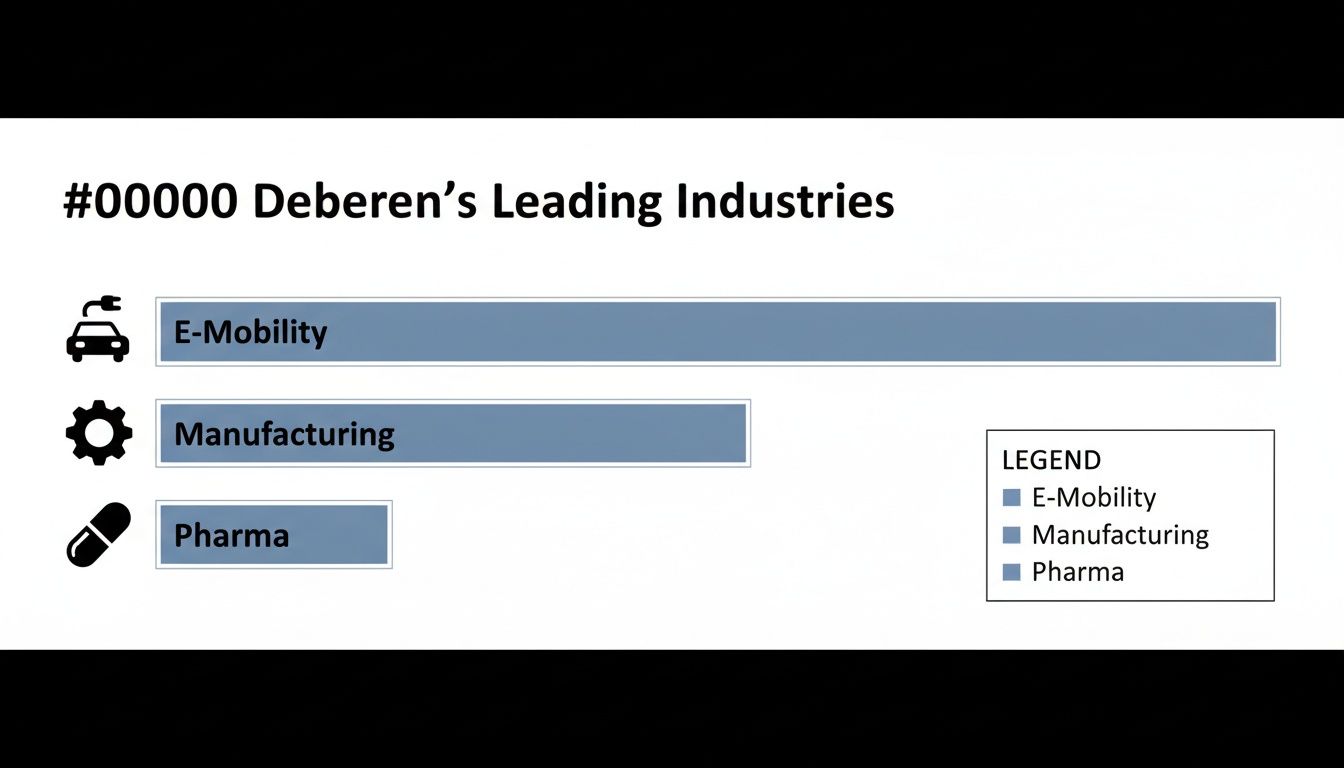
The influx of high-tech investment directly correlates with rising salary expectations for qualified individuals.
Typical Salary Ranges for High-Demand Roles
Below are estimated gross monthly salary ranges for in-demand roles in Debrecen. These figures are a baseline; final compensation depends on company, role complexity, and candidate experience. For international context, comparing these with the median salary in the Netherlands can provide a useful perspective on the broader European market.
Estimated Salary Ranges for Key Professions in Debrecen (Monthly Gross HUF)
This data illustrates a clear path for financial growth, which is a powerful retention incentive for employees and a key part of long-term talent strategy for businesses.
For hiring managers, these benchmarks are a strategic tool. Competitive compensation packages are fundamental to reducing employee turnover and securing high-demand talent. A well-structured salary progression demonstrates a clear, rewarding career path within the company.
The Business Impact of Cost of Living
A salary's value is best measured by its purchasing power. Debrecen's lower cost of living significantly enhances the real-world value of a professional's earnings.
- Housing: Rental and property prices are substantially more affordable than in Budapest or other major European cities, directly improving disposable income.
- Transport: The city's efficient and compact infrastructure reduces commuting costs and time.
- Daily Expenses: Groceries, dining, and other living costs are lower, meaning net income goes further.
This favorable cost-of-living-to-salary ratio is a competitive advantage. It means that a Debrecen-based salary often translates into a higher quality of life and greater savings potential than a nominally higher salary in a more expensive city. This is a critical factor for attracting talent and a key benefit for employees.
How to Navigate the Hiring Process
Understanding the local hiring culture is as important as having the right qualifications. For anyone targeting jobs in Debrecen, knowing the process provides a competitive advantage and streamlines the job search. The hiring process is generally direct, but local conventions matter.
The typical workflow begins with a CV submission, followed by one or more interview stages. For technical roles, expect a skills assessment or a practical coding challenge. Companies in Debrecen, especially multinational corporations investing billions in advanced facilities, are looking for candidates who align with their long-term strategic goals, not just immediate technical needs.
Crafting a CV for the Hungarian Market
Your CV is your initial introduction. In the Hungarian market, hiring managers prefer a clean, professional, and fact-driven format. A creative, design-heavy resume may be less effective than a clear, concise document.
The goal is to provide a scannable summary of your professional capabilities. Keep it to a two-page maximum and list experience in reverse chronological order. This makes it easier for recruiters to quickly assess your fit, increasing the likelihood of your application moving forward.
Key elements to include:
- A Professional Photograph: Unlike in the UK or US, a professional headshot is standard practice and expected on a Hungarian CV.
- Clear Contact Information: Ensure your phone number, email, and LinkedIn profile are prominently displayed.
- Focus on Achievements, Not Just Responsibilities: Use action verbs and quantify outcomes (e.g., "Reduced project delivery time by 15% by implementing a new CI/CD pipeline"). This connects your work to clear business results.
- Education and Skills: Clearly list degrees, certifications, and technical proficiencies. Specify language fluency levels using a standard framework (e.g., English C1, Hungarian B1).
The Interview Process Unpacked
Interviews in Debrecen typically occur in stages. The process often starts with an HR screening call to cover your background, motivation, and salary expectations. Subsequent interviews with the hiring manager and potential team members will focus on technical depth and cultural fit.
Candidates who demonstrate a clear understanding of the company's strategic direction stand out. For example, if interviewing with an automotive firm, discussing their sustainability goals or digitalization strategy shows you are invested in their business outcomes, not just looking for a job.
Prepare to provide specific examples of your work. The local business culture values direct, evidence-based answers. Use the STAR method (Situation, Task, Action, Result) to structure your responses, demonstrating how you have solved problems and delivered value in past roles.
Finally, while English is the standard corporate language in most multinational firms, basic Hungarian proficiency is a significant asset. It signals a commitment to local integration and can provide a competitive edge, especially for roles involving local suppliers or regulatory bodies. To bridge immediate skills gaps, companies are increasingly using flexible models like team augmentation to bring in specialized experts for critical projects, reducing time-to-hire.
Where to Look for Your Next Job in Debrecen
A targeted job search saves time and connects you directly with the most relevant opportunities. This is true for candidates seeking a new role and for companies aiming to attract the right talent.
Debrecen's job market is a key driver of Hungary's economy. Nationally, there are approximately 78,000 vacancies at medium and large enterprises, particularly in manufacturing and automotive. Debrecen is a microcosm of this trend, serving as a major growth center with thousands of open roles. This activity supports Hungary’s 75.0% employment rate (for ages 15-64) as of early 2025. You can explore more insights into how mega-investments are shaping the region's future to understand the broader economic context.
Local and National Job Boards
Online job portals are the primary channel for most job seekers. They aggregate listings from numerous companies, allowing for efficient filtering by industry, seniority, and role.
- Profession.hu: The largest job site in Hungary, featuring a comprehensive list of jobs in Debrecen across all sectors.
- Dreamjobs.hu: Focuses on specialized, professional, and white-collar roles, making it ideal for experienced candidates.
- CVonline.hu: Another major platform in the Hungarian market, covering a wide range of positions from entry-level to senior management.
After identifying target employers, expanding your search can be beneficial. Reviewing these best job search websites can provide additional leads.
Direct Company Career Pages
Applying directly through a company's career page is a powerful strategy. Major employers often post critical or niche roles on their own sites first. This approach helps them identify candidates with a genuine interest in their organization.
Regularly check the career pages of key employers like BMW Group, National Instruments (NI), CATL, and Teva Pharmaceuticals. Most offer job alert features that notify you when relevant positions become available.
For a hiring manager, a direct application is a strong signal of intent. It indicates the candidate is proactively targeting your company, suggesting a higher level of engagement and interest in your mission.
Networking and Recruitment Agencies
Professional networking is crucial. LinkedIn is an essential tool for connecting with recruiters and hiring managers in Debrecen. Engaging in industry-specific discussions and joining relevant groups increases your visibility to key decision-makers.
Recruitment agencies are another effective channel, particularly for senior or highly technical roles. They have deep industry connections and often manage exclusive mandates that are not publicly advertised. Firms like Hays, Randstad, and Adecco have a strong presence in Hungary. For students and recent graduates, our guide on student jobs in Budapest contains networking tips applicable across the country.
A Practical Guide to Relocating to Debrecen
Securing a job in Debrecen is the first step; the next is managing the relocation. For companies, providing relocation support is a critical component of attracting and retaining top international talent. A smooth transition directly impacts a new hire's productivity and long-term commitment.
This section covers the practical aspects of relocating, from securing work permits to finding housing, providing a clear roadmap for both candidates and employers.
Visa and Work Permit Essentials
For non-EU citizens, navigating the legal requirements for work and residency is the first priority. Hungary offers a combined residence and work permit, which streamlines the process.
The employer typically initiates the application. They must demonstrate that a suitable Hungarian or EU candidate could not be found for the position. The application package requires the employment contract, proof of qualifications, and proof of accommodation.
Key documents to prepare:
- A valid passport with at least six months of validity remaining.
- A signed employment contract.
- Proof of accommodation, such as a rental agreement.
- Proof of health insurance.
The entire process can take several weeks. It is crucial for both the employee and the employer to start early to avoid delays that could impact the start date and project timelines.
Finding Your Feet: Housing and Daily Life
Once the permit process is underway, the next step is securing accommodation. Debrecen's property market offers a range of options, from modern city-center apartments to family homes in quieter suburbs, at prices significantly lower than in Budapest.
Administrative tasks like opening a Hungarian bank account are straightforward. You will typically need your passport, residence permit, and an address card (lakcímkártya). A local bank account is necessary for salary payments and managing local expenses.
Navigating a new country's bureaucracy can be challenging. Many large companies in Debrecen offer relocation support services to assist new hires with everything from apartment hunting to local registration. This support significantly reduces the administrative burden on the employee, allowing them to focus on their new role faster.
Quality of Life and Family Considerations
Debrecen offers a high quality of life for both individuals and families. For those relocating with children, the International School of Debrecen (ISD) provides a full English-language curriculum, which is a key decision factor for many expat families.
The healthcare system is robust, with both public and private options available. Most international professionals opt for private health insurance to ensure access to English-speaking doctors and shorter wait times. Access to quality education and reliable healthcare provides peace of mind, which is essential for a successful long-term relocation.
Frequently Asked Questions (FAQ)
What is the primary language used in the workplace?
While Hungarian is the official language, English is the standard business language within multinational corporations and the technology sector in Debrecen. Global teams in e-mobility, IT, and business services operate almost exclusively in English to ensure clear communication and operational efficiency. However, basic Hungarian proficiency is a valuable asset. It demonstrates a commitment to local integration and can provide a competitive advantage, particularly in roles requiring interaction with local suppliers or government entities.
Are there many jobs for new graduates?
Yes. The close collaboration between the University of Debrecen and major employers like BMW creates a strong talent pipeline. Companies actively recruit from local universities, often through internships and vocational programs. This strategy reduces onboarding time and costs for businesses, as graduates are already familiar with industry-specific tools and processes. For graduates, it provides a direct pathway from education to a meaningful career.
How much demand is there for tech skills?
Demand is extremely high and growing. The massive investments in advanced manufacturing and e-mobility have created a significant need for specialized technical skills.
The most in-demand skills are:
- Automation and Robotics: Expertise in designing, implementing, and maintaining automated production systems is critical for improving efficiency and reducing operational costs.
- Software Development: Skills in embedded systems, data analytics, and cloud platforms are essential for developing next-generation products and digital manufacturing processes.
- Battery Technology: Specialists in chemical engineering and materials science are required for the city's large-scale battery production facilities.
- Digital Manufacturing: Professionals who can create and manage "digital twins" of physical assets are crucial for optimizing production and reducing downtime.
Is Debrecen a good place for a long-term career?
Yes. Debrecen's economic strategy is built on long-term sustainability. The city’s diversified economy—spanning automotive, pharmaceuticals, and business services—creates a stable job market that is resilient to sector-specific downturns. This industrial diversity provides professionals with greater job security and more opportunities for career progression. The continuous influx of foreign investment is also creating new senior-level and leadership roles, offering clear pathways for long-term career growth.
At SCALER Software Solutions Ltd, we understand that building high-performing teams is the key to business success. Whether you need to augment your team with senior EU-based engineers or require a dedicated partner to manage an end-to-end project, we deliver secure, scalable solutions designed to meet your objectives. Learn more about how we can accelerate your delivery.
< MORE RESOURCES / >

Fintech
A Practical Guide to Proof of Concepts in Fintech

Fintech
Django vs Flask: A CTO's Guide to Choosing the Right Framework

Fintech
Your 2025 Guide to Finding Student Jobs in Budapest

Fintech
Kotlin vs Java: A Strategic Guide for Business & Tech Leaders

Fintech
Go vs Rust: A Strategic Comparison for Tech Leaders

Fintech
The Real Meaning of IoT (Internet of Things Jelentése): A Guide for Business Leaders

Fintech
A Consultant's Guide to Job Opportunities in Hungary

Fintech
A Strategic Guide to Team Augmentation

Fintech
A Tech Leader's Guide to Nearshore Development

Fintech